Once the Directory goes from a few dozen to a few hundred records, looking through it stops being enough: you need to see it as a whole. That's what Demographics is for.
How to get there
In Directory, at the top, switch to the Demographics view.
What it shows
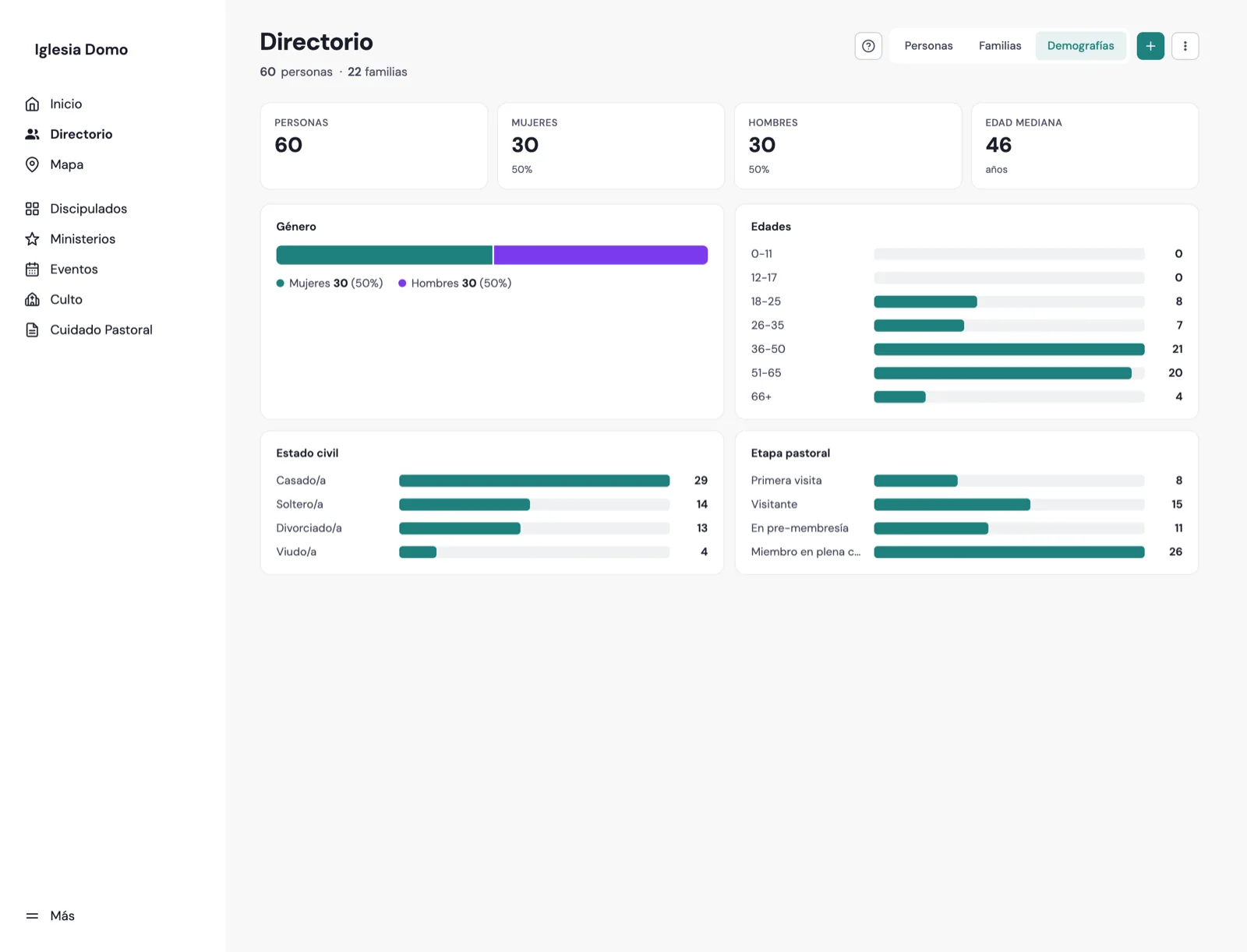
Four readings of your congregation, each with its bars and its numbers:
- Pastoral stage — how many visitors, pre-members, members, minors… It's the breakdown that says the most about where your church is right now.
- Gender — men, women and no data. What's missing is counted too: it tells you how much is left to fill in.
- Ages — in bands (0-11, 12-17, 18-25, 26-35, 36-50, 51-65, 66+) and the congregation's median age.
- Marital status — single, married, divorced and widowed.
Marital status counts adults only. Minors are deliberately left out: nearly all of them are recorded as single and would only skew the chart.
Removed people are left out (unless you ask)
By default the charts count active people: those in terminal stages — transferred, excommunicated, deceased — aren't included, because they're no longer part of today's congregation.
If you want to compare against the full roll, turn on Include removed. The switch only appears if there are any.
It's an overview, not a list
Demographics shows counts, never people. You won't find here who meets which condition: that's what the Directory's search and filters are for. The sensitive data — dates of birth, for example — doesn't even leave the server: only each bar's number reaches the browser.
For the same reason, member accounts don't see this view: the make-up of the congregation is leadership reading.
What it's for
- Seeing whether your church is aging or getting younger, and whether your youth work is proportional to the young people you actually have.
- Noticing how many records are incomplete (the "no data" in gender or age) before drawing conclusions from any other report.
- Backing a planning conversation with numbers: how many pre-members are waiting, how many minors are coming up.